It’s vacay time, and my position homework for the summer is to review all of the positions I’ve learned to date. Rick Mooney’s Position Pieces for Cello have been great for getting “the feel” of each position in isolation, but my brain still struggles when trying to switch between different them. I’ll be starting Book 3 in the fall, however, and rumour has it Book 3 is when positions really come out to play.
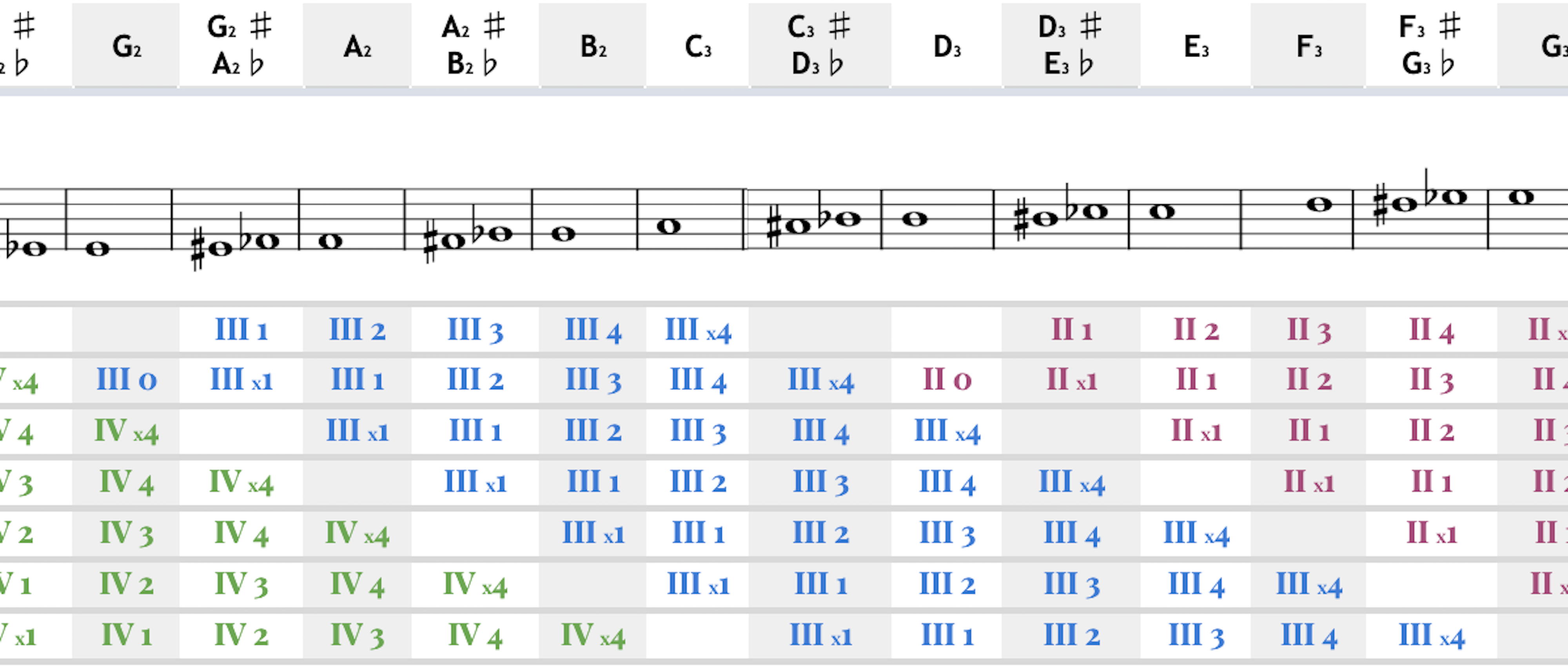
I’ve been working on understanding the relationship between the positions, and where each note overlaps as we move our fingers about the fingerboard. Sure, there’s only one place to play E♭3 (arguably the best note) on the D string (regardless of which finger finds it), but that same note also has a home on the G string. Once we move in to the upper positions, presumably there’ll be even more places where this frequency lives.
There are, of course, some excellent instructional blogs, and people smarter than I have created very helpful position charts. I encourage you to take a look at:
But neither of these quite showed me what my brain needed. And so, I’ve created, the Cello Face Table of Lower Positions. This should be fairly self-explanatory. Each column is for a given note, and each row is for a given position. In the cell, I note which string and which finger, in that given position, will yield that given note.